How to Clarify Cocktails at Home (Milk, Agar, ml)
Unlock the secrets to crystal-clear cocktails! This comprehensive guide teaches you how to master clarification techniques at home, from milk washing to agar methods. Elevate your mixology skills and impress your guests with stunning, refined drinks.

You can clarify a cocktail at home, in millilitres, with whole milk, agar, or gelatin. A centrifuge is optional, and only useful if you already own one. A clarified cocktail is transparent because suspended pulp and protein have been removed. Colour, sugar, acid, and alcohol stay in the liquid.
The cold milk wash on this page uses one ratio: 220 ml of whole milk for every 500 ml of sharp mix. The worked rum and cognac punch is that ratio in a single jug, and it is ready the same day. The agar method takes about a day, keeps a vegan drink sharp, and is the path if you avoid dairy.
On this page
- What clarified cocktails are
- Which method to use
- Equipment at home scale
- Cold milk wash
- Warm English milk punch
- Agar freeze-thaw
- Gelatin fining
- Centrifuge finishing
- Clarified rum and cognac milk punch
- Agar-clarified gin and lemon
- If the drink stays cloudy
- Storage, alcohol, and service
- Common questions
What clarified cocktails are
Haze in a cocktail is suspended material: citrus pulp, pectin, protein, and tiny droplets of oil or fat. A filter or a fining catches that material. Dissolved colour, sugar, acid, and alcohol remain, so a finished milk punch is often amber and see-through.
Milk washing and clarified milk punch are the same family. Acid drops the pH towards the point where casein curdles, around pH 4.6. You do not need a meter. If the mix tastes as sharp as a sour before the milk goes in, there is enough acid for a home batch. The curd network traps haze. The liquid that drips through is whey.
Agar clarification is a freeze-thaw. Agar, a seaweed powder, sets the drink into a gel. Freezing bursts the pockets in that gel. As it thaws, liquid leaves and the agar holds the solids. That drip is the clarified cocktail. Bars call the separation syneresis.
Gelatin fining is a settle-and-pour, used at a low dose in wine, tea, and apple juice. It is a different job from agar. The centrifuge section is a short optional finish for a machine already on the bench.
Eighteenth-century milk punch used the same idea as the warm method below: spirit, citrus, sugar, and hot milk, then a slow strain. Household recipes in that tradition, including Benjamin Franklin's, were made by the bowl. The batches here are one jug.
Which method to use
| Method | Best for | Time | Notes |
|---|---|---|---|
| Cold milk wash | Sours and punches | 4 to 8 hours | 220 ml whole milk per 500 ml sharp mix; softens acid |
| Warm milk punch | English milk punch flavour | 2 to 6 hours | Milk at 75°C, poured into the cold punch |
| Agar freeze-thaw | Vegan drinks, juices, sharp sours | About 24 hours | 2.5 g agar per 500 ml; spirit stays off the boil |
| Gelatin fining | Wine, tea, cloudy apple juice | 8 to 12 hours | 0.1 g per litre, from a dilute solution; not vegetarian |
| Centrifuge | Optional polish | Minutes | Only with a machine you already own |
Start with the cold milk wash if you eat dairy and you want a drink today. Start with agar if the drink must be vegan, pineapple is in the mix, or you want the acid to stay bright. Use gelatin when the liquid is tannic and low in spirit, such as wine lengthened with water. Leave the centrifuge until the other three are familiar, and skip it entirely if you do not already own one.
Fresh pineapple, kiwi, and papaya produce enzymes that digest milk protein and gelatin. For those juices, use agar.
Equipment at home scale
The first clear drink needs a measuring jug marked in millilitres, digital scales that read 0.1 g, a fine-mesh sieve, muslin or a clean thin cotton cloth, paper coffee filters, a small pan, a thermometer for the warm milk method, and space in the fridge. Agar and gelatin are weighed. A heaped spoon is not a measure, because brands pack differently.
A jigger, bar spoon, and strainer for the drinks you build before clarifying are covered in the home bar tools guide.
Pasteurised UK whole milk, about 3.5% fat, is the milk to buy. Long-life whole milk can curdle, with a cooked note. Semi-skimmed curdles and tastes thinner. Single cream and double cream make a heavy curd and a dull drink. Agar means powder, not flakes. If you only have flakes, weigh the same grams and give them longer in the simmer. Gelatin is weighed in grams for the same reason sheet grades differ.
A centrifuge, a vacuum filtration flask, or a rotary evaporator is a later experiment if the machine is already yours. None of those tools are linked from this page.
If you are giving a first home-bar set, rather than ingredients for a clarified drink, one beginner cocktail kit is enough. Expect a shaker, a jigger, and a spoon. That kit does not clarify anything. Cloth, filters, milk, agar, and gelatin on this page stay unlinked.
Cold milk wash
How to clarify a cocktail with a cold milk wash.
Use this when the drink already has citrus, wine, or another acid, and you are happy to serve dairy. The finished liquid is whey. It still contains lactose, so it is the wrong method if you avoid dairy. Soy drinks and oat drinks rarely form a curd you can filter clear. Use agar for a vegan batch.
Acid rule. Before the milk goes in, the mix should taste as sharp as a sour: spirit, lemon, and sugar, with no egg white. Milk softens the perceived acid, so a mix that tastes perfect before the wash tastes flat afterwards. If you have not built a sour in millilitres before, the beginner cocktail guide shows that build. Clarify after the balance is right.
Pour the cold acidic mix into the cold milk, not the other way round, for this version. One slow stir is enough. A hard whisk breaks the curds into dust, and dust passes through the cloth. The curds are the filter bed. Ladle them in first.
Where the steps mention 1:1 sugar syrup, dissolve 100 g caster sugar in 100 ml water and cool it. Caster sugar dissolves faster. Granulated white sugar is fine if you stir until the liquid is clear. Measure the finished syrup by volume. Fresh lemon juice is the acid in the worked recipe. Strain out the pips. Bottled lemon juice curdles milk reliably and tastes duller.
Both the mix and the milk should be fridge-cold, about 4°C. Discard the spent curds. They are an alcohol-soaked filter, not a dish to cook with.
Build 500 ml of cocktail that tastes as sharp as a sour, with citrus in it, and chill it to about 4°C.
Pour the cold mix into 220 ml of cold whole milk, about 3.5% fat. Stir once. Refrigerate for 45 to 60 minutes, until distinct curds sit in a translucent whey. A very sharp mix can curdle in a few minutes. Wait for that translucent whey either way.
Set a fine sieve over a jug and line it with muslin or a thin cotton cloth. Ladle the curds in first, then the liquid. Let it drip in the fridge, and do not press the cloth. If you have no cloth, leave the curds to settle, pour off the liquid above them, and pass that liquid through a paper coffee filter in the fridge. Cover the filter so the drink does not take on fridge smells.
Pass the liquid through the filter again until it is transparent when you hold it to the light.
Taste. Adjust with 5 ml of 1:1 sugar syrup or 5 ml of lemon juice at a time. Bottle, cap, and refrigerate.
Warm English milk punch
How to clarify a warm English milk punch.
Use the same volumes as the cold wash: 500 ml of sharp mix and 220 ml of whole milk. The change is heat and the direction of the pour. Heat gives the cooked-milk flavour associated with eighteenth-century punch. Use a thermometer.
Stop at 75°C. Milk that boils smells cooked and throws a tight curd that clogs the cloth. The punch itself stays fridge-cold so the temperature falls as soon as the milk hits it.
Build the same 500 ml sharp mix used for the cold milk wash, including the citrus, and chill it to about 4°C.
Heat 220 ml of whole milk to 75°C. Keep it under 80°C. If it steams hard or forms a skin, it has gone too far for this method.
Pour the hot milk into the cold punch in a thin stream. Stir once. This is the reverse of the cold method, where the cold mix goes into the milk.
Rest the jug for 30 minutes. Strain it as for the cold milk wash: curds into a cloth-lined sieve first, drip in the fridge, and do not press. Repeat the pass until the liquid is transparent.
If the warm batch smells boiled, the next one should be the cold wash. Clarity comes from the strain either way. Heat is a flavour choice.
Agar freeze-thaw
How to clarify a cocktail with agar.
Use this for a vegan clear drink, for pineapple, kiwi, or papaya, and for any sour you want to keep sharp. Agar does not soften acid. Taste the drip and sweeten in 5 ml steps if you need to.
Dose the gel at 0.5%: 2.5 g of agar powder for every 500 ml of liquid in the finished gel, spirit included. The gin recipe further down is the same method at 450 ml, which comes to 2.3 g. High citrus can weaken a gel. If the set is sloppy, the next batch at this scale uses 3 g per 500 ml (2.7 g for the 450 ml gin batch).
Dissolve agar in the non-spirit portion. Ethanol boils near 78°C, and a hard boil drives off aroma. Simmer the juice, syrup, tea, or water with the agar for 2 minutes, cool to about 60°C, then stir in the spirit and pour before the gel sets. Agar sets as it falls towards roughly 40°C. A shallow tray freezes and thaws faster than a deep jug.
Thaw in the fridge, covered with a plate if the sieve allows it. A warm kitchen melts the separation into a cloudy drip. The spent agar is a soft sponge. Leave it. Pressing it pushes haze into the jug.
Juice with no spirit can be heated as a whole batch. Skip the 60°C wait and pour once the agar has dissolved and the foam has settled.
Split the batch into the part that can be heated (juice, syrup, tea, or water) and the spirit, which stays off the heat. Weigh 2.5 g of agar powder for every 500 ml of liquid in the finished gel. If there is no spirit, heat the whole batch.
Whisk the agar into a small splash of the cold non-spirit liquid until there are no dry grains.
Bring the rest of the non-spirit liquid to a simmer, whisk in the agar slurry, and simmer for 2 minutes until the liquid is clear and no grains remain. If grains persist, keep a gentle boil for one more minute.
Take the pan off the heat and cool it to about 60°C, which is above agar's setting point and below a hard boil. Stir in the spirit. Pour at once into a shallow tray.
Refrigerate until the gel is firm, about 1 hour. Freeze it solid for at least 8 hours.
Set a cloth-lined sieve over a jug in the fridge. Tip in the frozen gel and let it thaw there for 8 to 12 hours. Collect the drip. Do not squeeze the cloth. Expect roughly three quarters of the gel volume back as clear liquid.
Gelatin fining
How to fine a cocktail with gelatin.
Gelatin settles some haze and tannin. It is a poor freeze-thaw agent, because the gel melts as it warms and thickens the drink again. Winemaking doses are small: about 0.1 g per litre. On a 500 ml jug that is 0.05 g, which a 0.1 g scale will not measure directly. Make a solution so a spoonful carries the dose. About 2 g in that same 500 ml is enough to turn the drink syrupy. Counting sheets fails when the box is bronze, gold, or platinum.
This suits a low-spirit, tannic liquid. The worked batch is 200 ml dry red wine, 40 ml 1:1 sugar syrup, and 260 ml water, plus 5 ml of gelatin solution. Neat 40% spirit has little tannin for gelatin to bind, so dilute first or use milk or agar.
Leave the jug still in the fridge. Movement keeps the sediment up. Pour until the stream dulls, then stop. The last cloudy centimetres are waste.
Gelatin is an animal product, usually beef or pork. It is not vegetarian. Agar is the vegetarian and vegan method on this page. Fresh pineapple, kiwi, and papaya digest gelatin. Use agar for those juices.
Serve the fined wine mix as an aperitif base: 80 ml of the clear layer with 80 ml of chilled soda water.
Weigh 1 g of gelatin and stir it into 20 ml of cold water. Leave it for 10 minutes. Platinum, gold, and bronze sheets are not the same mass, so weigh them. Warm the bloomed gelatin until it melts, keeping it under 60°C, then add cold water until the solution measures 100 ml. Each 5 ml now holds 0.05 g of gelatin.
Stir 200 ml dry red wine, 40 ml of 1:1 sugar syrup, and 260 ml water in a jug.
Stir in 5 ml of the gelatin solution. That is 0.1 g of gelatin per litre. Do not pour in the rest of the solution.
Refrigerate the jug, covered and still, for 8 to 12 hours. Keep any leftover gelatin solution in the fridge and use it within 2 days, or discard it.
Pour off the clear layer through a coffee filter and stop before the sediment. For a different volume, keep 10 ml of this solution per litre of mix. A dose near 2 g per 500 ml turns the drink syrupy rather than clear.
Centrifuge finishing
How to finish a clarified cocktail in a centrifuge.
A centrifuge increases the force on particles so they fall out of the liquid. It does not curdle milk, set agar, or remove dissolved colour. If you do not already own one, the milk, agar, and gelatin methods are the whole job.
A salad spinner, a blender, and a coffee machine are not substitutes. This page does not name a model and does not link to a shop.
Use food-safe tubes, balance them by weight, and keep the lid closed. Cracked tubes are a reason to stop, not a reason to top them up. After a milk wash, a short spin can replace a slow final filter. It still needs the acid and the curd. Spinning an unfined, low-acid sour only packs pulp into a pellet and leaves pectin haze behind.
Pass the drink through a fine sieve first so large pulp is not packed into the bottom of the tube.
Fill food-safe tubes to equal weight, with matching tubes opposite each other. Close the lid. Stop the machine if it vibrates.
Run the cycle the manufacturer specifies for juice. Bench machines often clear juice at several thousand times gravity in a few minutes. Do not copy a revolutions-per-minute figure from a different model, because the rotor radius changes the force.
Lift out the clear supernatant and leave the pellet in the tube. If the liquid is still hazy, the haze is dissolved colour or an emulsion. Milk, agar, or gelatin is the next step, not a longer spin.
Clarified rum and cognac milk punch
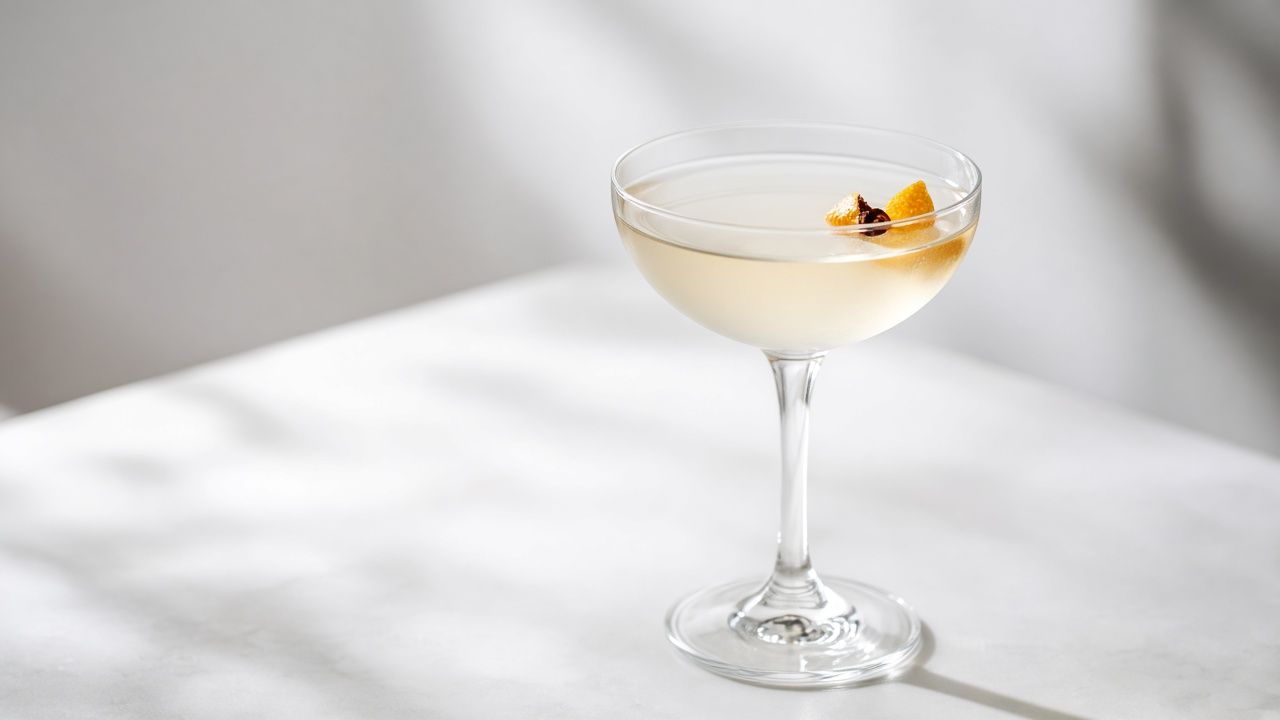
How to make clarified rum and cognac milk punch.
This is the cold milk wash at the standard ratio: 500 ml of sharp mix and 220 ml of whole milk. The spirit split is 170 ml aged rum and 85 ml cognac. Choose bottles you would drink with ice, around 40% ABV. The estimate of strength further down assumes 40%. The buy links are on the ingredient lines.
Lemon is 115 ml, which is 23% of the 500 ml mix, so the jug tastes sharper than the finished punch. The 70 ml of syrup and 60 ml of water sit inside that 500 ml. Whole milk is 220 ml on top, so you pour 720 ml in and get less back.
Punch ingredients
- 170 ml aged rum
- 85 ml cognac
- 115 ml fresh lemon juice
- 70 ml 1:1 sugar syrup
- 60 ml cold water
- 220 ml cold whole milk, about 3.5% fat
Stir 170 ml aged rum, 85 ml cognac, 115 ml fresh lemon juice, 70 ml 1:1 sugar syrup, and 60 ml cold water. Chill the jug to about 4°C.
Pour the cold mix into 220 ml of cold whole milk. Stir once. Refrigerate for 45 to 60 minutes, until curds and a translucent whey have separated.
Line a fine sieve with muslin or thin cotton over a jug. Ladle the curds in first, then the liquid. Let it drip in the fridge. Do not press the cloth.
Pass the drip through that filter bed again until the liquid is transparent against the light. A final paper coffee filter is worth using if any haze remains.
Taste and correct with 5 ml syrup or 5 ml lemon juice at a time. Cap the bottle and refrigerate. You should collect roughly 540 to 600 ml, about 7 serves of 80 ml.
Serve 80 ml very cold in a small wine glass. Express a lemon peel over the surface at the table. Those oils never went through the filter, so they belong on the finished drink, not in the jug you strain.
The curds hold water. Squeezing the cloth buys a few millilitres and puts haze back. A yield far under the 540 to 600 ml in the last step means the drip was stopped early.
If both spirits were 40% ABV, the jug starts with 102 ml of pure ethanol (255 ml of spirit times 0.40). Collected at about 570 ml, with the assumption that the curds kept little of the ethanol, the pour is around 18% ABV. That is a kitchen estimate, not a lab assay. Clarification did not strip the alcohol.
Drink it with strong cheddar, salted almonds, or ginger biscuits. The cocktail and food pairing guide covers the table around a drink like this. Up to 60 ml of the water in the mix can be cold, unsweetened black tea if you want a drier finish. Keep the 500 ml acidic-mix total the same by swapping tea for water, not by adding it on top.
Agar-clarified gin and lemon
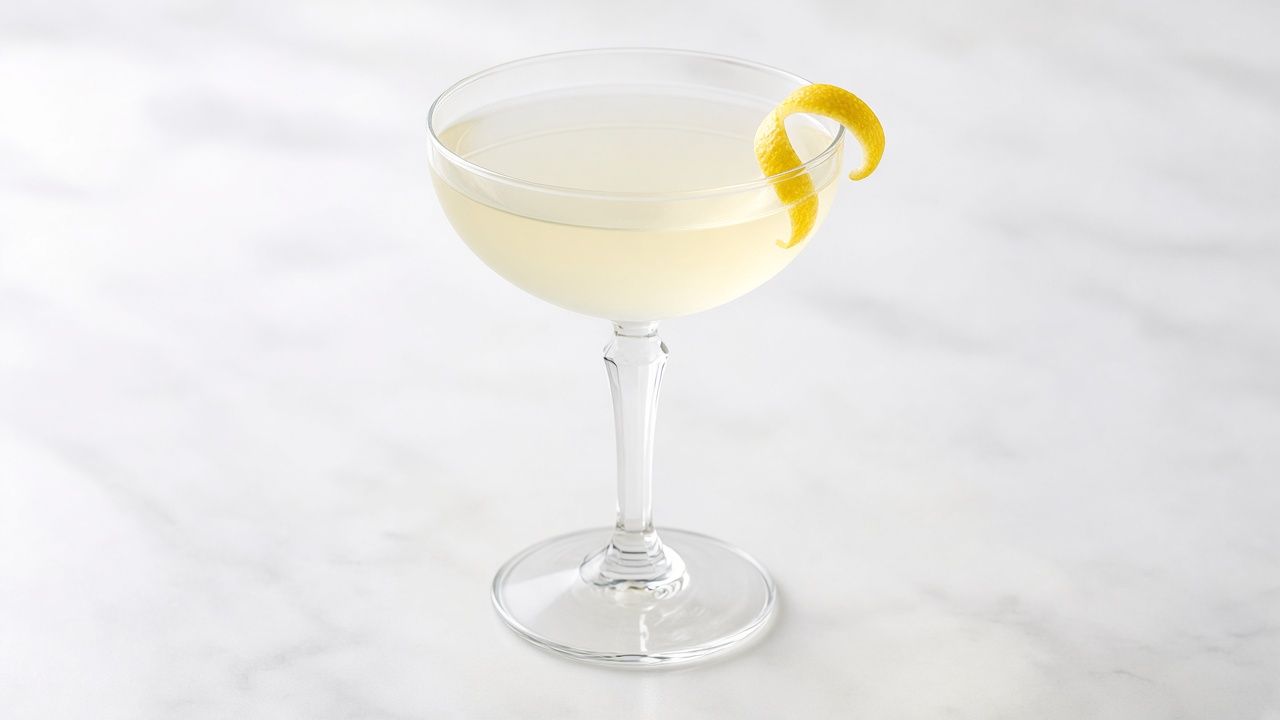
How to make an agar-clarified gin and lemon.
This is the agar method at 450 ml. The heated portion is 100 ml lemon juice, 50 ml 1:1 sugar syrup, and 150 ml water. The spirit is 150 ml of London dry gin, stirred in at about 60°C. Agar is 2.3 g.
The result is a clear, sharp gin sour base. Lengthen it, or drink it short. It will not taste creamy. That softness is what the milk punch is for.
Gin ingredients
- 2.3 g agar powder
- 100 ml fresh lemon juice
- 50 ml 1:1 sugar syrup
- 150 ml water, of which 50 ml is used to slurry the agar
- 150 ml London dry gin
Weigh 2.3 g agar powder. Stir it into 50 ml of cold water so there are no dry grains. That dose is 0.5% of this 450 ml batch, rounded to 0.1 g.
Warm 100 ml fresh lemon juice, 50 ml 1:1 sugar syrup, and the remaining 100 ml water to a simmer. Whisk in the agar slurry. Simmer for 2 minutes, until the liquid looks clear and no grains remain.
Take the pan off the heat and cool it to about 60°C. Stir in 150 ml London dry gin. Pour at once into a shallow tray.
Refrigerate until the gel is firm, about 1 hour. Freeze it solid, at least 8 hours.
Set a cloth-lined sieve over a jug in the fridge. Tip in the frozen gel and let it thaw there for 8 to 12 hours. Do not squeeze the cloth.
Taste the drip. If it is too sharp, stir in 5 ml of 1:1 syrup at a time. Expect roughly 320 to 380 ml of clear mix. Agar does not soften acid the way milk does.
For a short drink, pour 75 ml of the clear mix into a chilled coupe. For a long drink, pour 60 ml and top with 90 ml of chilled soda water. A long drink from a 350 ml drip makes five or six glasses.
If the gel did not set, the agar did not fully dissolve or the dose was low for this much lemon. Remake with 2.7 g and a full 2-minute simmer. Do not try to rescue a sloppy gel by freezing it and hoping.
If the drink stays cloudy
| What you see | Likely cause | What to do |
|---|---|---|
| No curds | Too little acid, or a plant drink in place of whole milk | Stir in another 15 ml lemon juice and wait 20 minutes |
| Curds like dust, filter clogs | The mix was whisked hard, or the milk boiled | Coarse cloth first, then a coffee filter. Do not press |
| Boiled-milk smell | Milk went past 80°C | Use the cold wash next time, or stop the warm method at 75°C |
| Agar gel will not set | Grains were not dissolved, or lemon weakened a low dose | Simmer until clear. Retry the gin batch at 2.7 g agar |
| Cloudy agar drip | The gel was pressed, or it thawed in a warm room | Thaw in the fridge and let it drip on its own |
| Flat gin aroma | The spirit was boiled with the agar | Dissolve agar in lemon, syrup, and water. Add gin near 60°C |
| Grey or brown, but see-through | Dissolved colour from rum, cognac, or wine | That is a finished clarified drink |
| Drink turns syrupy after gelatin | The dose was high enough to set | Stay at 5 ml of the 1 g-per-100 ml solution per 500 ml |
A second pass through the same curd bed fixes more haze than a new paper filter with no bed.
A big batch leaves a pile of squeezed lemons and limes. Before they go in the bin, the peels can become syrup or garnish; our zero-waste cocktail recipes show how.
Storage, alcohol, and service
Keep clarified drinks in a capped bottle in the fridge, with as little air in the neck as you can manage. They are perishable. Clarification is not sterilising, and it is not a preserving boil.
A milk punch is at its best within 5 to 7 days. The agar gin mix, with no dairy, is at its best within 7 to 10 days. The gelatin-fined wine mix is at its best within 5 days because the alcohol is low. Between pours, put the bottle back in the fridge. Two hours on the table is the limit during a party.
Discard the bottle if it smells stale or cardboard-like, if it fizzes when you open it, or if you see mould. Darkening of a rum punch in the fridge is normal oxidation. A new sour smell is not.
Alcohol stays in the drink. The milk punch estimate above, around 18% ABV for a 570 ml yield from 40% spirits, is the way to think about any batch: millilitres of pure ethanol in, divided by millilitres of filtrate you actually collected, assuming the solids kept little of the ethanol. Measure your own yield. Do not borrow 18% for the gin recipe. That one still contains whatever ethanol was in the 150 ml of gin, minus what little boiled off if you followed the 60°C step.
The milk punch fits cool weather. In warmer months, lengthen the agar gin with soda. More drinks by season are in the seasonal cocktail guide.
Serve the milk punch without ice when you want the clearest glass. If you do use ice, use one large clear cube so the melt is slow and the drink stays transparent. The crystal-clear ice mould guide covers that freeze.
Common questions
What is a clarified cocktail?
A clarified cocktail is a mixed drink filtered until suspended pulp, proteins, and fine haze are gone. The liquid is transparent, and it can still have colour from the spirit, wine, or syrup. Clarification changes texture and appearance. It does not remove alcohol, and it does not make every drink colourless.
How do you clarify a cocktail with milk at home?
Build 500 ml of mix that tastes as sharp as a sour, chill it, and pour it into 220 ml of cold whole milk. Rest it in the fridge until curds form and the whey looks translucent, then strain it through a cloth without pressing. Pass it again until it is transparent. Soy and oat drinks do not replace whole milk.
What is the difference between a milk punch and agar clarification?
A milk punch uses milk proteins to trap haze. It softens acid and leaves a dairy roundness, and the clear liquid still contains lactose. Agar clarification sets the drink with agar, freezes it, and lets the clear liquid drip out as it thaws. Agar is vegan and keeps the sharper flavour. Milk is the quicker home method when you want that softer punch.
Is a clarified milk punch lactose-free?
No. The clear liquid is whey, and whey still contains lactose. Discarding the curds does not make the drink lactose-free. If you avoid dairy, use the agar freeze-thaw method on this page.
Can you clarify a cocktail without milk?
Yes. Agar freeze-thaw is the home method for a vegan clear drink. Gelatin fining is a second dairy-free option, and it is not vegetarian. Soy milk and oat drinks rarely form a curd you can filter to clarity.
Does gelatin clarify cocktails the same way as agar?
No. Agar keeps a gel structure while the clear liquid drips out during a fridge thaw. Gelatin melts as it warms, so the same freeze-thaw sequence usually fails. Fine with a light dose instead: 0.1 g of gelatin per litre. Weigh 1 g, melt it, and top the solution up to 100 ml, then stir 5 ml of that solution into a 500 ml mix. Chill for 8 to 12 hours and pour off the clear layer. A heap near 2 g per 500 ml turns the drink syrupy. Weigh the gelatin, because sheet sizes differ.
Do you need a centrifuge to clarify cocktails?
No. Milk, agar, and gelatin work with a sieve, a cloth, and coffee filters. A centrifuge can speed separation if you already own one and you follow that machine's safety rules. It is optional. This page does not name a model and does not link to a shop.
Why is my clarified cocktail still cloudy?
The usual causes are too little acid in a milk wash, pressing the curds or the agar gel, thawing agar in a warm room, or using a fine filter before a coarse pass. Hold the glass to the light. If you can see through it, amber colour from rum or cognac is finished, not a fault. Pass a hazy liquid through the same filter bed again and do not squeeze it.
How long does a clarified cocktail keep, and does it lose alcohol?
Keep it in a sealed bottle in the fridge and treat it as perishable. A milk punch is at its best within 5 to 7 days. An agar-clarified drink with no dairy is at its best within 7 to 10 days. Clarification does not boil off or filter out alcohol. Discard the drink if it smells stale, fizzes, or grows mould.